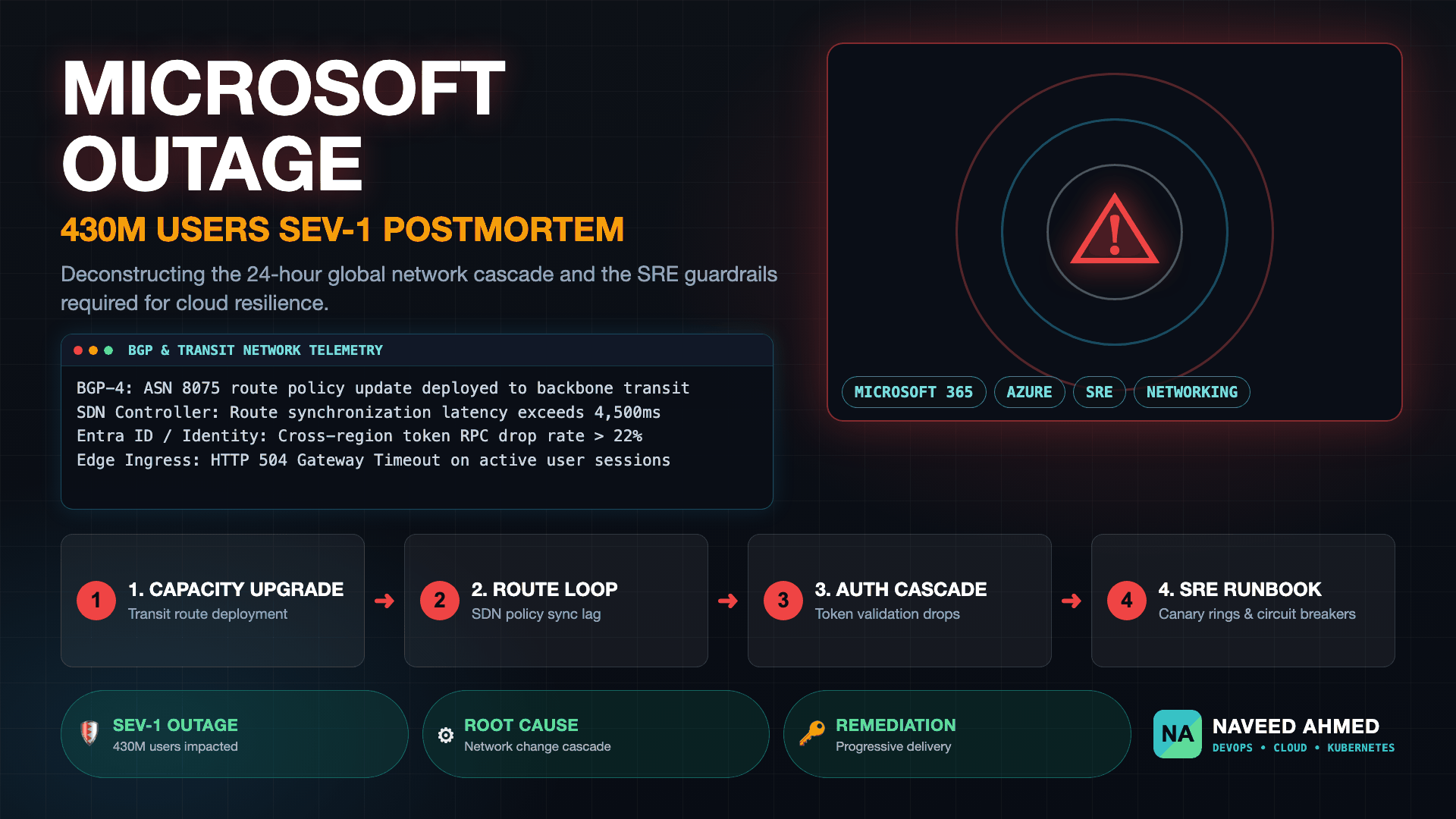
A major Microsoft outage disrupted global operations for roughly twenty-four hours on November 12, 2026, cutting off access to Microsoft 365, Exchange Outlook, Teams, and Copilot for over 430 million users across seventy countries. From hospital clinics in the UK NHS to international airport check-in desks and judicial proceedings, the blast radius was immediate and severe. While headlines reported a generic cloud failure, evaluating this incident through a disciplined cloud outage postmortem reveals how an internal network capacity upgrade breached regional fault boundaries and cascaded across global control planes.
For Site Reliability Engineers, platform architects, and systems administrators, this incident highlights a fundamental cloud truth: high-availability application redundancy cannot protect you if the underlying software-defined network (SDN) and identity transit layers share common fate. In this architectural guide, we dissect the timeline, examine the exact BGP route convergence failure, contrast M365 and Azure failure boundaries, and provide an actionable SRE runbook with runnable alerting rules to contain blast radius in your own infrastructure.
Incident Overview: What is the Microsoft Outage and What Happened Today?
The Microsoft outage is a major global service disruption that took down Microsoft 365 applications, including Teams, Outlook, and Copilot, for over 430 million users across seventy countries. Triggered by an internal network capacity upgrade, the twenty-four-hour incident severed authentication pipelines and cascaded across global enterprise, healthcare, and aviation systems.
Whenever engineers ask what is microsoft outage or search for what is the microsoft outage today?, they are encountering the reality of hyperscale shared-fate dependencies. When users across the world asked did microsoft have an outage today, the answer was evident across enterprise monitoring consoles. Real-time telemetry confirmed that core collaboration suites went dark in what became the largest global disruption and the most severe microsoft outage 2026 event recorded to date.
Engineering teams seeking verified incident information and tracking the full scope of this microsoft cloud outage today must analyze the operational footprint. The historical correlation between microsoft and outage trends demonstrates how shared services fail together. Incident bulletins revealed that the failure was not localized to a single availability zone. Because the issue affected central authentication and edge routing tiers, the disruption spanned North America, Europe, the Middle East, and Asia, generating widespread microsoft cloud outage news and incident reports that began circulating late into microsoft outage yesterday.
The 970+ Incident Handbook & K8s Runbooks are exclusive to subscribers — unlock for FREE
Get battle-tested production runbooks, AWS architecture blueprints, and zero-downtime CI/CD post-mortems sent directly to your inbox. 100% free, no spam.
Microsoft Outage Timeline: From Network Route Flap to Resolution
The Microsoft outage timeline unfolded over twenty-four hours, beginning with an automated transit capacity deployment at 11:45 ET. Packet loss rapidly escalated to eighteen percent, breaking Entra ID authentication handshakes by 12:40 ET. Engineers initiated configuration rollbacks at 02:00 ET, allowing transit routing and customer ingress to achieve full restoration by midday.
Tracking the chronological progression in the microsoft outage timeline explains how a maintenance task initiated an uncontrolled failure cascade. Similar cascading dependencies appear when diagnosing SRE incident response scenarios involving severe upstream error spikes. When the configuration pushed, real-time telemetry on the official microsoft outage status page and internal monitoring dashboards began lighting up with transit errors.
During the disruption, engineers and IT administrators closely followed every microsoft outage update, reading real-time microsoft cloud outage update bulletins and public telemetry feeds. Examining the live outage map revealed widespread regional stalls, including heavy impact across Europe, the Americas, and South Asia (where queries regarding microsoft outage pakistan and regional transit routes spiked on local monitors). The official administrative portal provided continuous progress indicators until engineers confirmed that the underlying routing tables were fully restored, marking the microsoft outage fixed milestone.
| Timestamp (ET) | Network & Transit Event | Operational Telemetry & Error Signature | SRE Mitigation Step |
|---|---|---|---|
| Nov 12, 11:45 | Automated network orchestration pushes planned capacity upgrade across core backbone switches | Baseline nominal; packet transit latencies below 8ms across primary inter-region links | Maintenance window execution flagged as green by deployment automation pipeline |
| Nov 12, 12:15 | Updated route policies trigger BGP convergence micro-loops and SDN route table desynchronization | Packet drop rate jumps to 18%; synthetic probe health checks time out across transit boundary | Automated alerting pages on-call network engineering operations bridge |
| Nov 12, 12:40 | Transit route drops prevent application frontends from reaching Entra ID token validation clusters | Global auth failure; active user sessions terminated in Teams, Outlook, and Copilot | Incident commander declares SEV-1 and halts all ongoing cloud configuration deployments |
| Nov 12, 16:30 | Hundreds of millions of client apps initiate concurrent reconnection attempts on short polling intervals | Edge ingress saturation; ingress gateways return continuous HTTP 504 Gateway Timeouts | Engineers apply ingress rate limiting and request throttling at edge proxies |
| Nov 13, 02:00 | Network operations team completes manual rollback of routing policies to preceding known-good state | Core routing stabilizes; transit latency normalizes below 12 milliseconds across core links | Out-of-band management console verified edge switch route table consistency |
| Nov 13, 11:30 | Token caches replenish, queue backlogs drain, and dependent services report normal throughput | Full service recovery; 100% availability confirmed across all Microsoft 365 suites | Incident closed; postmortem documentation and long-term remediation actions logged |
Root Cause Breakdown: What Caused the Microsoft Outage?
The root cause of the Microsoft outage was an internal network capacity upgrade and subsequent configuration change deployed to core backbone routers. The update introduced Border Gateway Protocol routing loops and software-defined network synchronization latency, dropping cross-region transit packets and preventing frontend web tiers from completing authentication handshakes with identity providers.
When investigating what caused microsoft outage or seeking the definitive cause of microsoft outage, it is vital to distinguish architectural facts from speculative commentary. Mainstream forums often jump to cyberattack theories; however, the technical reality confirmed by official bulletins is that this was an engineering change management failure. There was no ransomware, no data breach, and no malicious actor involved in this incident.
Addressing what caused the microsoft outage and investigating failure propagation comes down to the mechanics of routing convergence. Isolating the exact root cause explains why microsoft is down when core transit policies fail. When the capacity configuration rolled out, it modified Border Gateway Protocol (BGP-4) route announcements across backbone Autonomous System transit nodes. Because the routing table updates were not sufficiently segmented, routing tables fell out of sync between core switches and software-defined WAN controllers.
Capacity change introduces conflicting BGP route metrics, creating routing micro-loops on backbone links.
Frontend proxy clusters cannot reach Entra ID identity clusters; OAuth token refresh handshakes fail.
Desktop and mobile clients drop active sessions simultaneously, locking 430M users out of active workflows.
Unjittered client retry loops flood edge gateways with billions of SYN requests, exhausting connection pools.
When packet TTL counters expired inside the routing loops, cross-region Remote Procedure Calls (RPCs) stalled. Frontend web proxies serving Teams and Outlook could no longer validate incoming OAuth security tokens against Entra ID directory replicas. This starved application gateways of authentication tokens, triggering immediate session terminations across independent SaaS suites.
M365 Outage vs Azure Outage: Blast Radius and Architecture Comparison
The distinction between an M365 outage and an Azure outage lies in the failure layer. An M365 outage affects software-as-a-service collaboration applications like Teams and Exchange, whereas an Azure outage impacts foundational cloud infrastructure like virtual networks and compute clusters. However, shared network transit and identity fabrics frequently cause joint disruptions.
Engineers and IT directors often debate m365 outage vs azure outage dynamics during service degradations. Defining what is a microsoft azure outage? and clarifying the microsoft azure outage meaning helps teams route incident triage appropriately. When exploring azure outage analysis and executing azure outage troubleshooting, engineers must isolate whether the fault lies in the cloud substrate or the SaaS collaboration tier.
During this incident, users experienced both a m365 cloud microsoft outage and an azure microsoft outage. Frontline office workers reported severe microsoft email outage today symptoms where mailboxes refused to synchronize. Concurrently, IT administrators logging into management consoles encountered an admin cloud microsoft outage alongside the outlook cloud microsoft outage, unable to load tenant dashboards or inspect microsoft 365 service health metrics.
AI workloads were similarly disrupted: the microsoft ai outage caused Copilot prompts to hang indefinitely, while developers noticed auxiliary disruptions such as a microsoft ai builder outage inside Power Platform workflows. Comparing the operational boundaries in azure microsoft outage today versus microsoft azure outage yesterday reveals how deeply intertwined modern cloud layers have become.
| Architectural Dimension | Microsoft 365 (SaaS Application Layer) | Microsoft Azure (IaaS / PaaS Infrastructure) |
|---|---|---|
| Core Services Affected | Exchange Online, Microsoft Teams, SharePoint, OneDrive, Copilot | Virtual Machines, Azure Kubernetes Service, ExpressRoute, Storage Accounts |
| Primary Failure Vector | Session invalidation, mailbox sync drops, auth token refresh failures | Cross-region VNet packet drops, API management gateway 5xx errors, routing loop timeouts |
| Status Verification Source | Microsoft 365 Admin Center Service Health Dashboard (requires auth) | Public Azure Status Page and Azure Resource Health per-subscription APIs |
| User Impact Pattern | End users cannot send emails, join video calls, or prompt AI assistants | Application workloads cannot route cross-region traffic or provision new cloud resources |
| Recovery Dependency | Depends on Entra ID token issuance and Exchange mailbox store connectivity | Depends on BGP route table stabilization and SDN policy synchronization |
When debugging application connectivity issues in cloud environments, similar connection dropping behaviors occur at the load balancing tier, as examined in our guide on AWS ALB 5xx troubleshooting.
Historical Cloud Outage Analysis: Network Changes vs CrowdStrike vs Data Center Power
Analyzing historical incidents reveals that cloud disruptions stem from distinct failure vectors: physical data center power faults, third-party kernel driver boot loops like CrowdStrike in 2024, or internal routing updates. Unlike cyberattacks or physical facility fires, configuration-driven network cascades propagate globally within seconds because automated transit policies bypass regional isolation boundaries.
To contextualize this event, SREs must analyze historical failure patterns. Users frequently confuse incidents, searching for crowdstrike data breach microsoft outage. It is essential to clarify that the July 2024 incident was neither a data breach nor a Microsoft architectural bug; it was a flawed kernel driver configuration file pushed by CrowdStrike that triggered Windows blue-screen bootloops. By contrast, previous cloud disruptions such as the microsoft cloud outage 2024 and the microsoft cloud outage 2025 incidents were primarily driven by internal infrastructure evolution.
Other historical precedents include physical disruptions such as a microsoft data center outage, localized microsoft data center outage today alerts, or severe facility events like a microsoft data center power outage where cooling or UPS systems fail in a single region. Network engineers also recall incidents like the microsoft azure outage october 2025 and historical microsoft cloud outage ns disruptions, where Azure Front Door DNS delegation records flapped.
When discussions surge on microsoft cloud outage reddit forums and technical channels, practitioners frequently ask whether an event is a true microsoft data outage involving permanent data loss or simply a temporary reachability fault. In this 24-hour event, data stores remained intact; the disruption was purely an availability and transit reachability failure that severed the connection between users and their data.
| Incident & Timeline | Underlying Failure Mechanism | Blast Radius Scope | Key SRE Takeaway |
|---|---|---|---|
| CrowdStrike Update (July 2024) |
Logic error in rapid-response channel file 291 caused memory access violation in kernel driver (csagent.sys) | 8.5 million Windows machines bootlooped globally across all clouds and on-premise servers | Third-party kernel drivers must undergo staged deployment rings and local kernel crash isolation |
| Azure Front Door DNS Flap (October 2025) |
Nameserver (NS) record delegation misconfiguration caused recursive DNS resolver cache invalidations | Regional web traffic routing failures affecting Azure hosted web applications and portal domains | DNS delegation and TTL configurations require automated pre-flight linting and slow-bake rollouts |
| Core Network Capacity Cascade (November 2026) |
Capacity upgrade introduced conflicting BGP route metrics and SDN policy distribution backlogs | 430M+ users locked out of Microsoft 365, Teams, Outlook, and Copilot across 70+ countries | Network changes must deploy across air-gapped canary rings with automated circuit breakers |
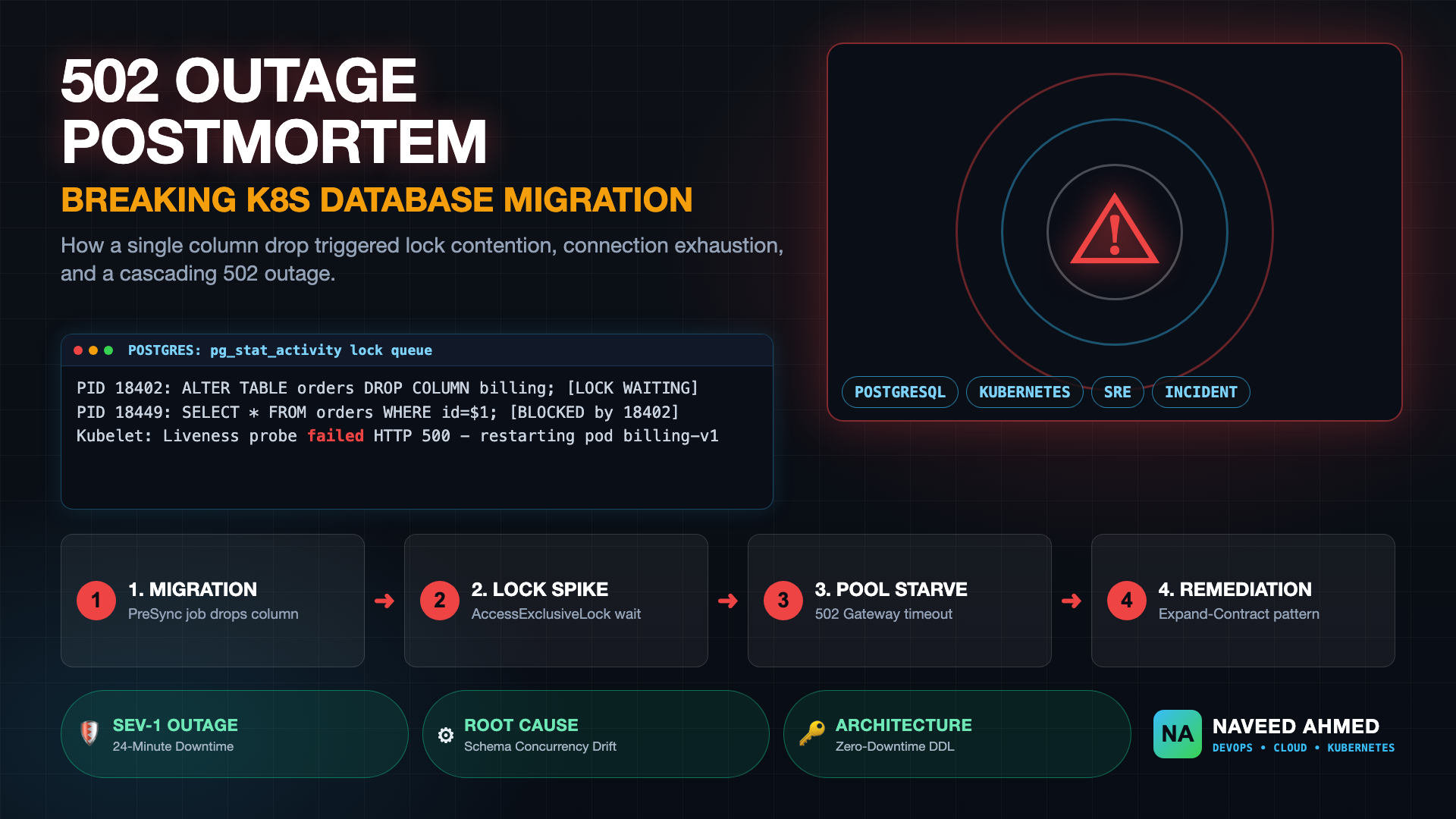
The lessons from cascading infrastructure rollouts apply across the cloud-native spectrum. Similar cascading failure patterns occur during Kubernetes database migrations, as explored in our postmortem on a database migration rolling update outage.
SRE Resilience Runbook: Outage Alerts and Communication Best Practices
A resilient SRE outage runbook combines automated telemetry circuit breakers with disciplined incident communication protocols. Platforms must continuously probe public cloud status endpoints, enforce client-side randomized exponential backoff to prevent thundering herds, and publish transparent external status updates every thirty minutes during major disruptions to maintain user trust and operational clarity.
When an upstream cloud provider falters, internal platform teams need concrete operational procedures. Establishing robust outage alerts best practices and executing clear outage communication best practices separates resilient organizations from chaotic ones. Relying solely on global outage status pages is insufficient because provider status dashboards are often delayed by thirty to sixty minutes during active triage.
When executives and end-users flood the helpdesk asking is microsoft having outages, how long will microsoft be down, what is the status of microsoft outage, or what is the latest on the microsoft outage, support teams need automated telemetry feeds. Implementing an infrastructure review following our DevOps infrastructure audit checklist ensures that external dependencies are continually monitored.
1. Deploy Automated Telemetry Circuit Breakers
Platform engineers must not rely on manual human intervention to halt network configuration deployments. Configure automated Prometheus alert rules that evaluate real-time transit packet drop rates and synthetic latency spikes every thirty seconds, automatically tripping deployment rollbacks if thresholds are breached:
# prometheus-network-circuit-breaker.yaml
groups:
  - name: network-change-circuit-breaker
    rules:
      - alert: CoreTransitPacketDropSpike
        expr: |
          (
            sum(rate(node_network_transmit_drop_total[2m]))
            /
            sum(rate(node_network_transmit_packets_total[2m]))
          ) * 100 > 0.5
        for: 30s
        labels:
          severity: critical
          action: automated-rollback
        annotations:
          summary: "Core transit packet drop rate exceeded 0.5% during maintenance"
          description: "Transit link {{ $labels.interface }} packet loss is at {{ $value }}%. Triggering automated rollback."

      - alert: SyntheticAuthHandshakeLatencyHigh
        expr: histogram_quantile(0.99, sum(rate(synthetic_probe_duration_seconds_bucket{probe="auth-handshake"}[2m])) by (le)) > 1.5
        for: 45s
        labels:
          severity: critical
          action: automated-rollback
        annotations:
          summary: "Synthetic authentication probe latency exceeds 1500ms"
          description: "End-to-end token validation latency spiked to {{ $value }}s across transit edge."
2. Prevent Secondary Thundering Herds with Full Jitter
When upstream authentication brokers recover, millions of application clients attempt reconnection simultaneously. Mandate randomized exponential backoff with full jitter in all internal microservices and desktop clients to avoid crushing recovering ingress controllers:
# resilient_client_retry.py
import time
import random
import requests

def fetch_with_jittered_backoff(url, max_attempts=5, base_delay=1.0, max_delay=30.0):
    attempt = 0
    while attempt < max_attempts:
        try:
            response = requests.get(url, timeout=3.0)
            if response.status_code == 200:
                return response.json()
            elif response.status_code in [502, 503, 504]:
                pass  # Upstream gateway flap; retry with randomized jitter
        except (requests.ConnectionError, requests.Timeout):
            pass

        attempt += 1
        if attempt >= max_attempts:
            raise RuntimeError(f"Exceeded {max_attempts} attempts connecting to {url}")

        # Full Jitter backoff formula
        backoff_cap = min(max_delay, base_delay * (2 ** attempt))
        sleep_duration = random.uniform(0, backoff_cap)
        time.sleep(sleep_duration)
3. Enforce Progressive Canary Infrastructure Delivery
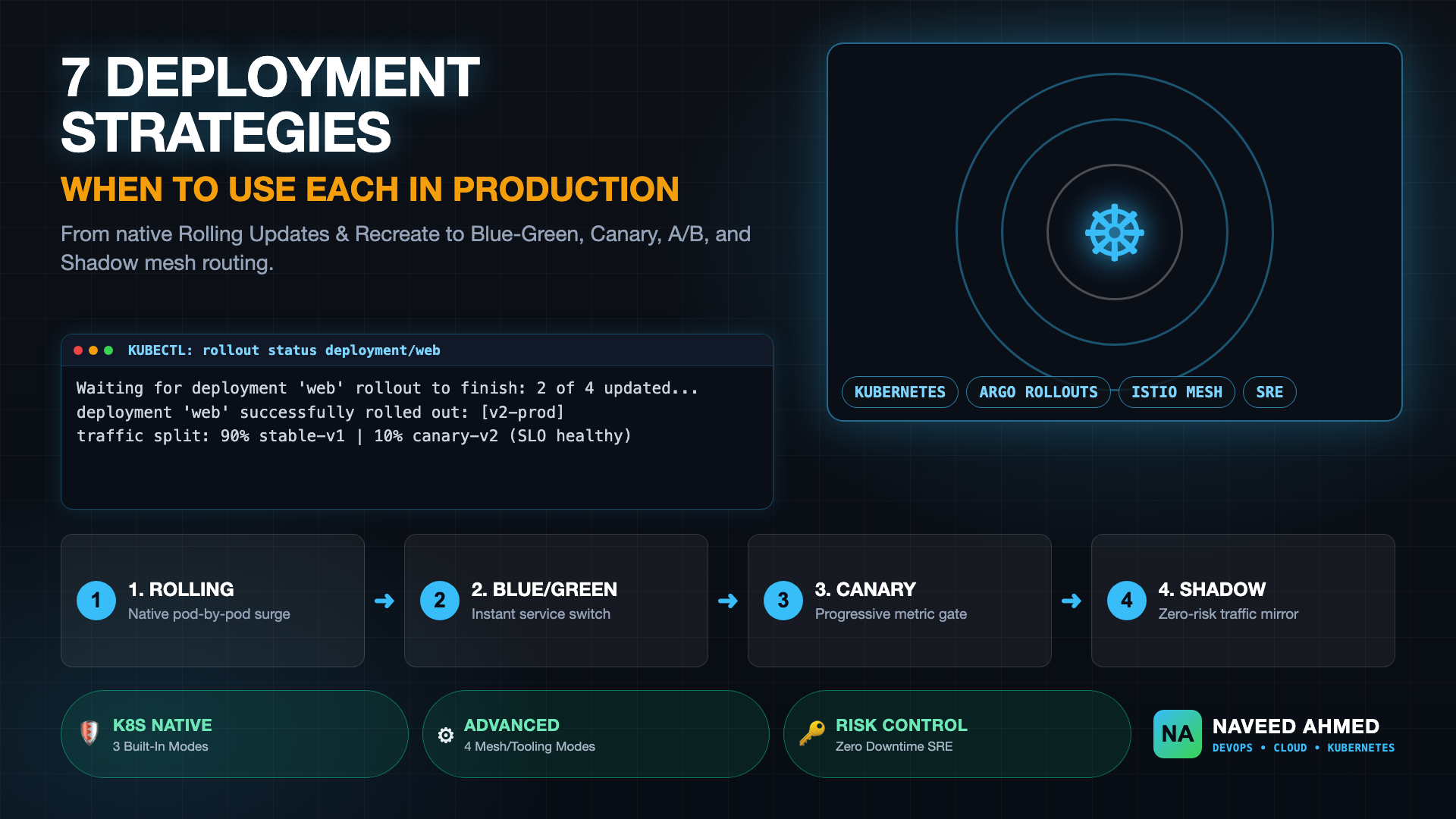
Never apply a routing modification across all backbone switches simultaneously. Segment network deployments into isolated canary rings, applying principles established in modern Kubernetes deployment strategies. Ring 0 should take 1% synthetic traffic, Ring 1 takes 5% non-critical traffic with a four-hour bake window, and only healthy results unlock full deployment. When planning subnet allocations and route boundaries, use our CIDR subnet calculator to ensure clean architectural partitioning.
Frequently Asked Questions
Direct answers to frequent engineering questions regarding AI coding agent disruptions, entry-level career outlooks, computer science degree value, and the changing landscape of software development roles in production environments.
What is the Microsoft outage and what caused it?
The Microsoft outage was a major global cloud disruption affecting Microsoft 365, Teams, Outlook, and Copilot. Microsoft confirmed the root cause was an internal network capacity upgrade and subsequent configuration change that introduced transit routing loops, severing cross-region authentication RPCs between edge frontends and identity providers.
What is the difference between an M365 outage and an Azure outage?
An M365 outage affects software-as-a-service productivity platforms like Exchange Online, Teams, and Copilot. An Azure outage impacts cloud infrastructure layers such as Virtual Machines, ExpressRoute, and storage clusters. However, because both suites rely on shared global network backbones and Entra ID identity brokers, network-layer failures frequently trigger cascading outages across both ecosystems.
Was the Microsoft outage caused by a cyberattack or CrowdStrike?
No, Microsoft explicitly confirmed the incident was not a cyberattack, ransomware incident, or AI-driven system failure. It was also completely unrelated to the July 2024 CrowdStrike Falcon sensor kernel update. It was an internal network engineering change deployed during planned capacity maintenance.
How can engineering teams monitor real-time Microsoft outage status?
Platform engineers monitor status through the authenticated Microsoft 365 Service Health Dashboard in the Admin Center, the public Azure Status page, external synthetic status trackers, and regional Downdetector telemetry. Automated SRE pipelines monitor live health by executing programmatic synthetic HTTP and OAuth probes directly against cloud tenant endpoints.
What SRE best practices prevent global blast radius during network updates?
SRE teams prevent global blast radius by enforcing progressive canary delivery across isolated routing rings, maintaining air-gapped out-of-band management planes for automated rollbacks, configuring automated Prometheus circuit breakers that halt deployments on packet drops, and mandating client-side randomized exponential backoff with full jitter.