1. The $73 vs $0 Illusion: Control Plane Fees vs Reality
Every startup blog post starts with the exact same talking point: "Amazon EKS charges $0.10 per hour ($73/month) per cluster for its control plane, whereas Amazon ECS has a $0 control plane fee."
When you are a bootstrapped or pre-seed founder watching every single dollar of server runway, an extra $73/month for a dev cluster, $73/month for staging, and $73/month for production ($219/month just for Kubernetes management nodes before running a single container) sounds like a wasteful luxury.
However, focusing solely on the $73/month control plane fee is a dangerous financial blind spot.
The real financial differentiator between ECS and EKS for early-stage companies is operational labor allocation and infrastructure inertia:
- The $73/mo EKS fee is trivial compared to the salary of a $165,000/year senior DevOps engineer hired exclusively to manage Helm charts, upgrade K8s versions every 4 months, maintain Ingress controllers, and configure Karpenter autoscalers.
- The $0 ECS fee is dangerous if your product requires complex microservice service discovery, custom sidecar interceptors, or multi-tenant namespace isolation that forces your developers to re-invent Kubernetes features using brittle custom scripts.
2. The Hidden Operational Tax: Engineering Hours as Capital
At a startup, your primary capital asset is not your AWS credits—it is senior engineering velocity. If a developer spends Tuesday afternoon debugging an AWS ALB Ingress Controller custom resource definition (CRD) or resolving an AWS IAM Roles for Service Accounts (IRSA) webhook timeout, that is an afternoon they did not spend shipping revenue-generating features.
The 3-Month Version Deprecation Treadmill
AWS supports standard Kubernetes versions for approximately 14 months. Every year, you must upgrade your cluster control plane, upgrade managed node groups, test API deprecations (e.g. flowcontrol.apiserver.k8s.io/v1beta2), and update critical add-ons (VPC CNI, CoreDNS, kube-proxy). For a two-person dev team, each upgrade requires 2 to 4 days of regression testing.
ECS is a fully managed AWS service abstraction. You specify a container image in an ECS Task Definition and point an Application Load Balancer target group at it. AWS manages the orchestrator lifecycle, underlying daemons, and security patching transparently. There are no API deprecations that brick your deployment pipelines.
3. Primitives Compared: Task Definitions vs Kubernetes Pods
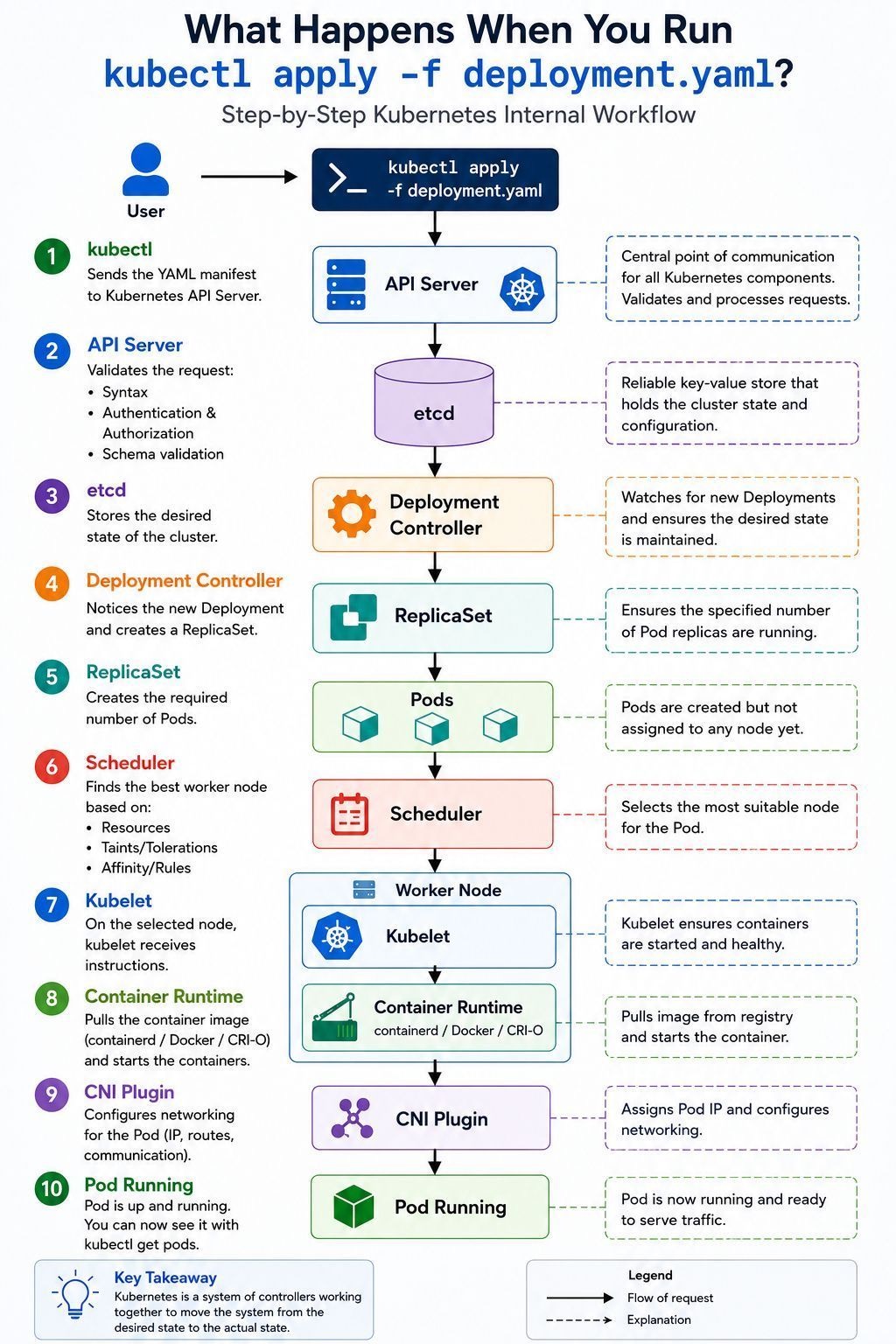
Understanding the conceptual mapping between ECS and EKS clarifies why ECS feels so much lighter for teams with standard web architectures:
| Architectural Primitive | Amazon ECS Pattern | Amazon EKS (Kubernetes) Pattern | Operational Overhead |
|---|---|---|---|
| Atomic Compute Unit | Task (1 or more co-located containers defined in JSON/YAML) | Pod (1 or more containers sharing network/IPC namespaces) | Equal cognitive load for single containers. |
| Service & Scaling | ECS Service (built-in target tracking, ALB integration) | Deployment + ReplicaSet + HPA | ECS autoscaling configures in 3 lines; K8s requires metrics-server + HPA YAML. |
| Routing & Ingress | Application Load Balancer (ALB) directly targets Tasks via IP | Ingress Controller (AWS Load Balancer Controller + Ingress CRDs) | ECS requires zero in-cluster controllers; EKS requires managing controller Helm charts and IAM roles. |
| IAM & Credentials | Task Execution Role (pull images) + Task Role (app permissions) | IRSA (OIDC provider + annotated ServiceAccounts) or EKS Pod Identities | ECS Task Roles use standard native AWS IAM ARN mapping; EKS requires OIDC thumbprint verification. |
| Service Discovery | AWS Cloud Map / Service Connect (Envoy-powered) | CoreDNS + Kubernetes ClusterIP Services | K8s has native, superior in-cluster DNS. ECS Service Connect has closed the gap significantly. |
| Configuration & Secrets | Direct integration with AWS Secrets Manager & SSM Parameter Store | Kubernetes Secret, ConfigMap, or External Secrets Operator |
ECS injects secrets natively into environment variables without extra operators. |
4. The Definitive 2026 Startup Decision Matrix
Instead of ideological debates about open source vs proprietary AWS primitives, apply this pragmatic decision framework:
- Team Size: Less than 15 total engineers, with zero full-time dedicated platform/SRE staff.
- Workload Profile: Monoliths, simple microservices (1 to 10 services), GraphQL/REST APIs, asynchronous background queue workers (Celery, BullMQ, Sidekiq).
- Tooling Philosophy: You prefer standard AWS services (CloudWatch, ALB, Secrets Manager) over managing third-party CNCF operators.
- Runway Focus: You need to launch your MVP in 3 weeks, not spend 3 weeks configuring Calico network policies.
- Pre-existing Expertise: Founders or foundational engineers already have 4+ years of hands-on Kubernetes experience.
- Ecosystem Dependencies: You require software packaged exclusively as Helm charts (e.g. self-hosted Kafka, Spark operators, temporal.io clusters, custom AI inference engines).
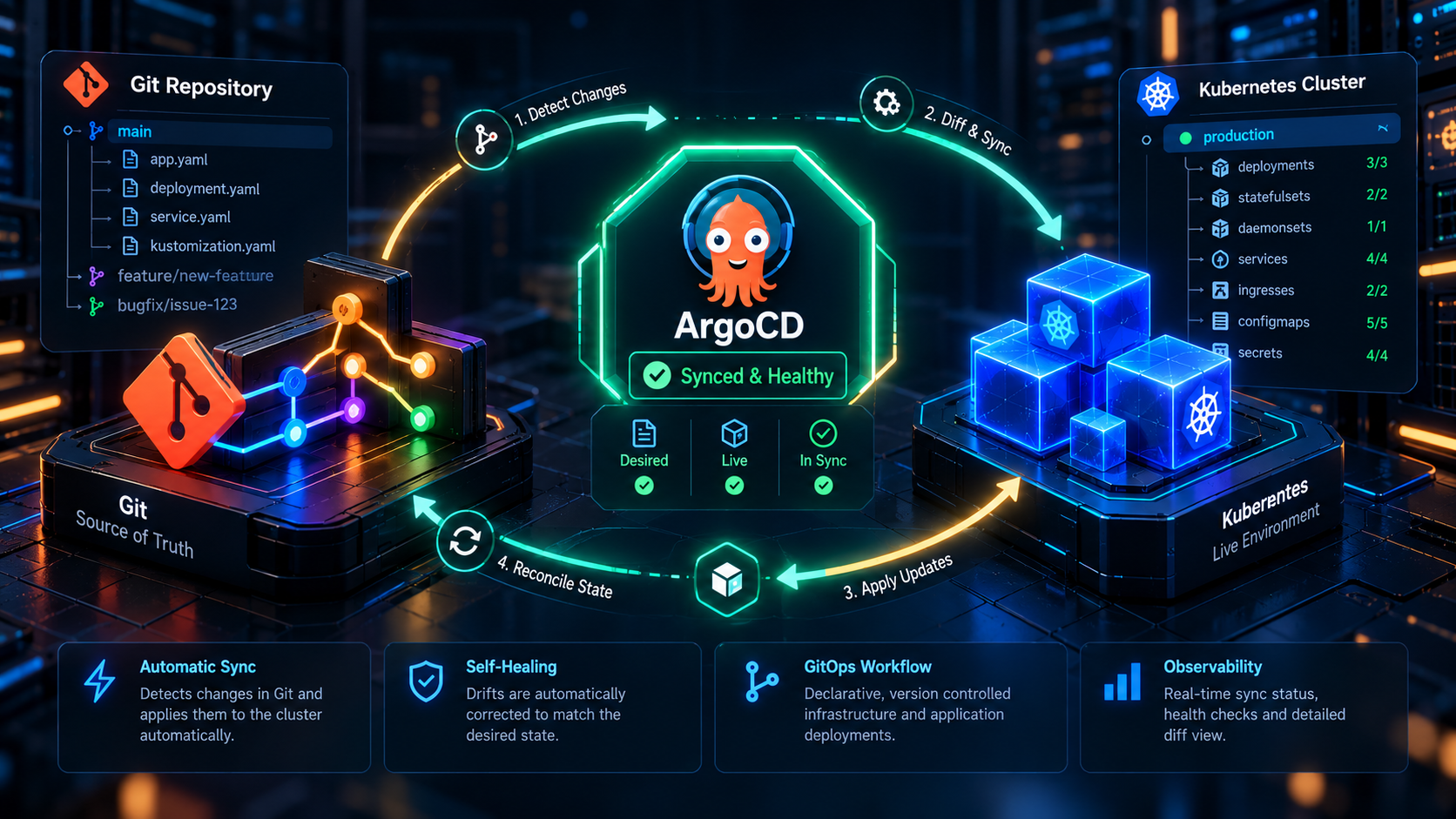
- Multi-Tenancy & GitOps: You need hard namespace isolation, network policies, and declarative continuous deployment via ArgoCD or Flux.
- Multi-Cloud Portability: A contractual or enterprise client requirement mandates that workloads run on both AWS and Google Cloud/Azure.
5. Realistic TCO & Runway Math: Seed to Series B
Let's look at real AWS billing figures for a typical B2B SaaS startup running 4 microservices across Dev, Staging, and Production environments:
Scenario A: Amazon ECS with AWS Fargate
Monthly Compute Breakdown (ECS Fargate):
- Dev Environment (4 tasks, 0.5 vCPU, 1 GB RAM, scaled to 0 at night): $18.40/mo
- Staging Environment (4 tasks, 0.5 vCPU, 1 GB RAM, 24/7):            $38.80/mo
- Production (4 services x 2 replicas = 8 tasks, 1 vCPU, 2 GB RAM):    $155.20/mo
- Control Plane Fee:                                                   $0.00/mo
- Shared ALB (3 rules):                                                $22.50/mo
---------------------------------------------------------------------------------
TOTAL AWS MONTHLY INFRASTRUCTURE BILL:                                  $234.90/mo
DevOps Maintenance Hours Required:                                     ~2 hours/month ($200 in labor)
REAL MONTHLY TOTAL COST OF OWNERSHIP (TCO):                             ~$435/month
Scenario B: Amazon EKS with Managed EC2 Node Groups
Monthly Compute Breakdown (Amazon EKS):
- Control Plane Fees (3 clusters: Dev, Staging, Prod @ $73/mo each):    $219.00/mo
  (Or 1 shared cluster with namespaces, risking blast radius):          ($73.00/mo)
- Dev Node Group (2 x t3.medium instances running 24/7):                $60.80/mo
- Staging Node Group (2 x t3.medium instances running 24/7):            $60.80/mo
- Prod Node Group (3 x m5.large instances across 3 AZs):                $210.24/mo
- 3 ALBs (AWS Load Balancer Controller per cluster/ingress):           $67.50/mo
---------------------------------------------------------------------------------
TOTAL AWS MONTHLY INFRASTRUCTURE BILL:                                  $618.34/mo
DevOps Maintenance Hours Required (Helm, upgrades, IRSA, triage):       ~20 hours/month ($2,000 in labor)
REAL MONTHLY TOTAL COST OF OWNERSHIP (TCO):                             ~$2,618/month
The Takeaway: For an early-stage startup, Amazon ECS with AWS Fargate delivers an annual savings of over $26,000 in combined cloud compute and saved engineering hours. Check our companion guide on How to Reduce AWS Costs Without Breaking Production for further FinOps strategies.
6. The Clean Migration Rule: Design on ECS Today, EKS Tomorrow
The biggest fear founders express when considering ECS is: "What if our startup scales rapidly to Series A, and we get locked in and cannot migrate to Kubernetes?"
This fear is unfounded if you follow the 12-Factor Container Cleanliness Rule:
- Keep Dockerfiles Pure: Do not install AWS CLI or proprietary ECS daemons inside your application container. Use standard Open Container Initiative (OCI) images. Follow our Docker Build Optimization Guide to keep runtime containers lean and distroless.
- Pass Configuration via Standard Environment Variables: Never hardcode AWS SSM or Secrets Manager SDK calls inside your application code. In ECS, inject them via
secrets: [{ valueFrom: "arn:aws:ssm:..." }]; in Kubernetes, inject them viaenvFrom: secretRef. Your code remains identical. - Use Terraform for Infrastructure Declarations: Manage your VPC, subnets, ALBs, and RDS databases using modular Terraform. When transitioning from ECS to EKS, 85% of your Terraform infrastructure (networking, IAM, storage, databases) remains completely unchanged. Review our Production AWS SaaS Terraform Architecture for module structure.
- Rely on DNS for Service Names: Use short DNS hostnames (e.g.
http://billing-service:8080) rather than proprietary hardcoded IP addresses. ECS Service Connect and Kubernetes CoreDNS both resolve these transparently.
7. Staff SRE Interview Scenarios: Defending Your Choice
In technical leadership and Staff SRE interviews, you will frequently encounter system design questions testing your architectural pragmatism:
"Our startup has 4 engineers and $200k in seed funding. Why shouldn't we start with EKS immediately?"
"Starting with EKS imposes an immediate operational tax before product-market fit. In addition to the flat $73/month control plane fee per cluster, EKS requires engineering cycles to configure and maintain Ingress controllers, VPC CNI IP allocation, IAM OIDC providers, CoreDNS autoscaling, and mandatory annual version upgrades. By launching on Amazon ECS Fargate, we achieve zero-infrastructure maintenance, native IAM task integration, sub-minute horizontal scaling, and $0 idle dev environments. We preserve our container portability by following 12-factor principles, allowing us to transition to EKS later when team size exceeds 25 engineers or when CNCF ecosystem dependencies justify the operational overhead."
8. Frequently Asked Questions
Can Amazon ECS scale to millions of requests per second?
Yes. Massive global companies—including Duolingo, Samsung, and segments of Amazon itself—run mission-critical, high-throughput production workloads on Amazon ECS. Scalability is determined by your compute capacity (EC2 instances or Fargate limits) and application architecture, not the orchestration control plane.
Is AWS Fargate cheaper on ECS or on EKS?
The raw per-vCPU and per-GB pricing for AWS Fargate compute is identical on both Amazon ECS and Amazon EKS. However, ECS with Fargate is generally cheaper in practice because you do not pay the $73/month EKS cluster fee, and ECS task provisioning has lower sidecar memory overhead compared to Kubernetes DaemonSets.
What is the biggest operational limitation of Amazon ECS?
The primary limitation of ECS is lack of access to the CNCF Kubernetes ecosystem. You cannot use Helm charts, Kubernetes Custom Resource Definitions (CRDs), operators (like Prometheus Operator or Strimzi Kafka), or Kubernetes-native GitOps tools like ArgoCD. You must use AWS APIs, CloudFormation, or Terraform to manage deployments.